Salle Biography: Her Rise From Church Choir to Nigerian Music Star
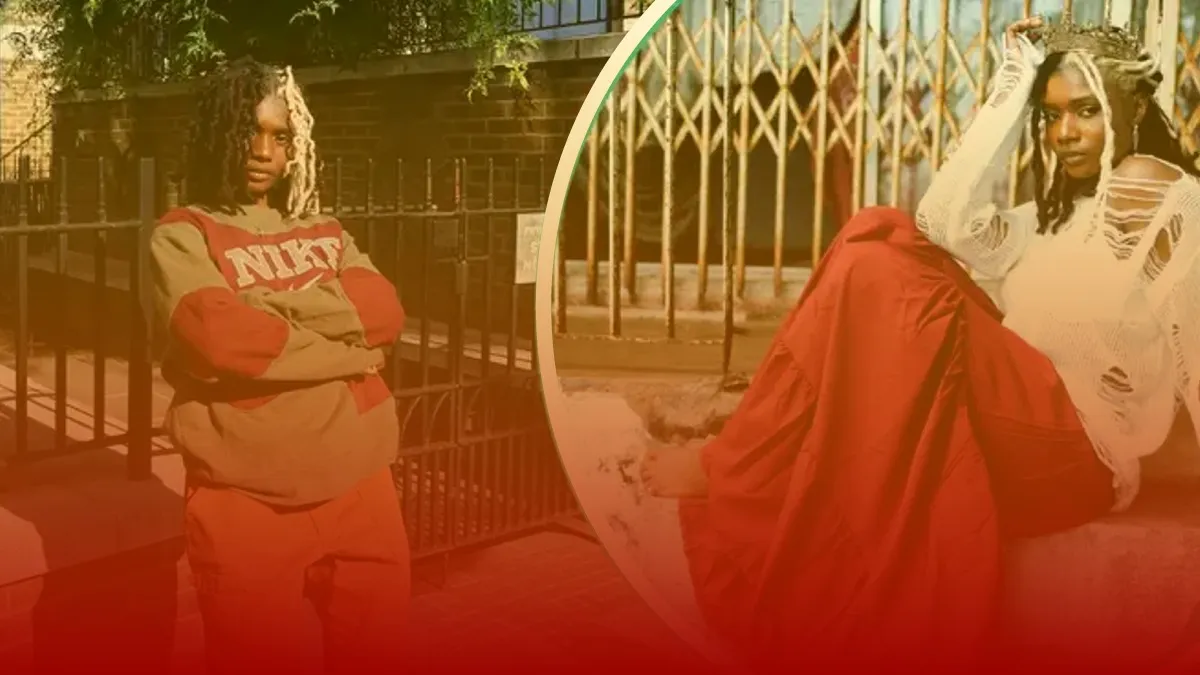
Nigerian singer and songwriter Salle, born Kosisochukwu Gospel Peters, became an internet sensation in 2021 after a video of her singing on the streets of Owerri went viral.
The young singer’s voice quickly attracted attention from major figures in Nigeria’s music industry, turning an unexpected social-media moment into the beginning of a professional music career.
But Salle’s musical journey started long before that viral clip. Growing up in Owerri, Imo State, she sang in church and developed an interest in songwriting, even though she initially did not see music as a career.
Salle’s early life and background
Salle was born on September 10, 2003, in Owerri, Imo State, Nigeria.
She grew up in a religious family and became involved in church music from a young age. Singing in the church choir gave her an early opportunity to develop her voice and songwriting abilities.
Despite receiving compliments about her singing, Salle said she initially treated music as something she enjoyed rather than something she would eventually pursue professionally.
Her mother also did not initially take the possibility of a music career seriously, which meant Salle’s professional ambitions developed gradually.
The street video that changed Salle’s life
Salle’s breakthrough came in September 2021, when a video of her singing while carrying a hawking tray circulated widely on social media.
The clip created immediate interest because of the quality and control of her voice, particularly given the ordinary street setting in which she was filmed.
Salle later clarified that she was not actually a hawker when the video was recorded. The tray became part of the visual that accompanied the viral moment, but it did not accurately represent her occupation.
The video gained even more exposure after Nigerian social-media personality Tunde Ednut reposted it.
From there, Salle’s voice reached some of the country’s biggest music personalities, including Davido and Don Jazzy, who showed interest in helping her develop her musical career.
The sudden attention transformed Salle from an aspiring singer known mainly to people around her into one of the young Nigerian artistes attracting national attention.

Salle’s music career takes shape
Following her breakthrough, Salle began developing a catalogue of original music rather than relying solely on the viral moment that introduced her to a wider audience.
She released her self-titled EP, which included songs such as “Magical” and “Rebel.”
Her wider catalogue includes tracks such as “Pressure,” “Therapy,” “Underskirt,” “Rebound,” “Psycho,” “Icon,” “If You Live,” “Journey Back Home,” “Let Me See,” “Soul” featuring T.I Blaze, and “Delilah.”
She has also explored covers, including versions of songs associated with artistes such as Tems and Fave.
The progression was important because viral fame can disappear quickly. For Salle, the challenge was turning attention from one widely shared performance into a sustainable musical identity.
Why Salle wants to make lasting music
Salle has described her ambitions as being bigger than simply achieving commercial success.
She has cited artistes including Asa, Jon Bellion, Michael Jackson and Nonso Amadi as musicians whose work created a lasting emotional impression on her.
That is the kind of impact she wants her own music to have.
Rather than measuring success only through immediate popularity, Salle has said she wants people to still connect with her songs many years after their release.
Her approach is closely connected to the meaning of her stage name, which she has described as representing art.
For Salle, that means remaining intentional about the music she creates even when commercial considerations are involved.
She has expressed a desire to avoid sacrificing the artistic qualities that matter to her simply to satisfy the business side of the music industry.
Salle’s approach to her career
That philosophy also explains why Salle places considerable emphasis on quality and longevity.
She has spoken about wanting her music to have the kind of lasting presence associated with artistes such as Bob Marley, Fela Kuti and Asa.
For an emerging artiste, that is an ambitious benchmark. It also gives some context to why Salle’s musical identity has not been built entirely around the viral fame that introduced her.
The 2021 video may have opened the door, but her stated ambition is to be remembered for the music that came afterward.
Salle’s record label and music releases
Salle has released music through different industry arrangements rather than operating her own record label.
There has also been confusion online over La Salle Records, which is associated with musician Travis Barker. That company is not Salle’s record label.
Her music has continued to build an audience online, with her social-media presence helping her maintain a connection with listeners beyond individual releases.

Salle’s personal life
Salle has generally kept her private life away from the spotlight.
There is no reliable public information establishing that she is married, and she has not made her romantic life a major part of her public identity.
Much of the attention surrounding her remains focused on her music, artistic development and the unusual story behind her breakthrough.
What happened after Salle’s viral breakthrough?
Salle’s story is ultimately about what happened after the viral video.
The street performance gave her visibility, while her earlier experience singing in church provided part of the foundation for her musical ability.
Since then, she has worked to establish herself as a recording artiste with a distinctive artistic philosophy.
Her emphasis on conscious and lasting music suggests that she is less interested in being remembered simply as the girl whose singing video went viral and more interested in building a catalogue that can stand on its own.
For Salle, the viral moment was the beginning of the story — not the entire story.